Everything is Big in Texas, Even Our Canyon
Texans, new and tenured, can rediscover the wonder of the landscape, which may be the nicest thing an outsider’s astonishment can do: make a familiar place unfamiliar again
Texas has been making a strong impression on European visitors in 2026. They are enamored by the culture, the barbecue and as it turns out, they are also blown away by our canyon, Palo Duro.
Over the summer of 2026, when they flocked to the Lone Star state to fill stadiums for the FIFA World Cup, Europeans were busy visiting Buc-ee’s, riding mechanical bulls, and two stepping in honkeytonk dives but they didn’t seem to venture far from I-35.
So, the enormous canyon in West Texas went largely unnoticed, and frankly, plenty of native Texans have never visited.
But, in late 2026 when a group of German content creators made a loop through the state, after taking in the state fair, San Antonio, and German heritage cities like Fredericksburg before heading West, they stopped at our canyon to give it it’s due.
https://x.com/FreddyLA7/status/2113349481030939114?a=CbRk_4CAs_pgogAkBiU&s=20
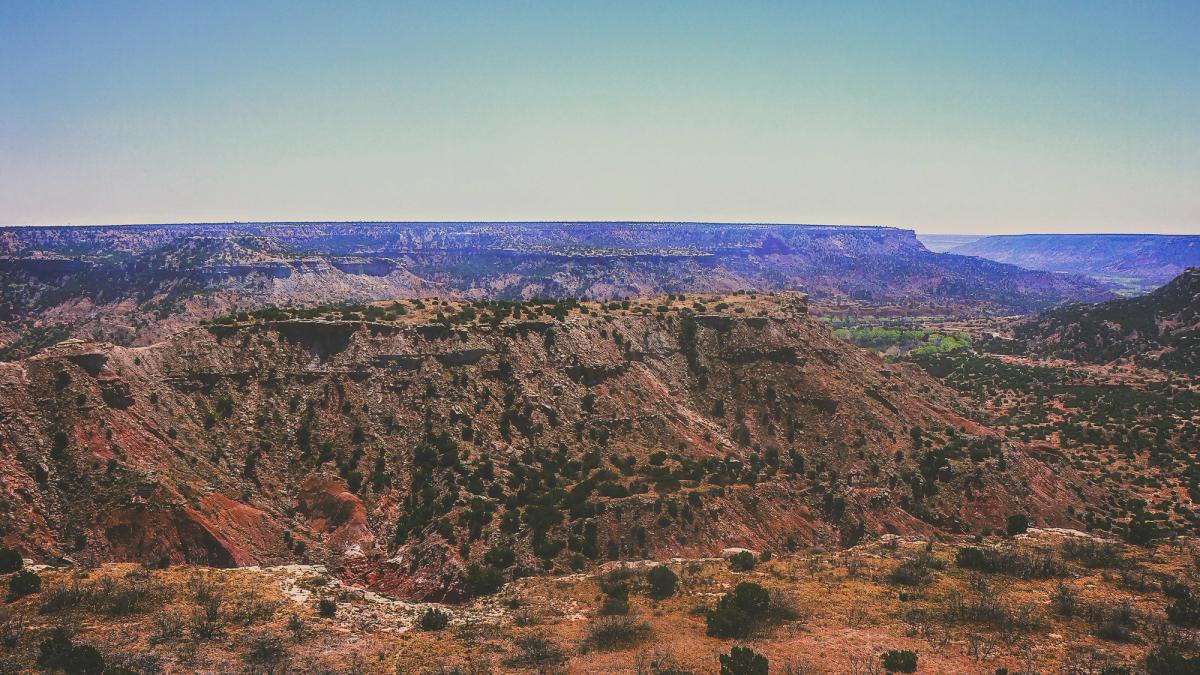
Located in the Texas Panhandle, Palo Duro Canyon is the second-largest canyon system (https://tpwd.texas.gov/state-parks/palo-duro-canyon/nature) in the United States. It’s 120 miles long, 20 miles wide, and 800 feet deep.
Texans can be accused of exaggeration, but this isn’t a big ditch that Texans call a canyon; it’s the real deal.
The canyon is surrounded by high plains, which makes its visual impact all the more impressive, with a single horizontal line abruptly swallowed up by a jagged void
“Palo duro” means “hard wood,” named after the Rocky Mountain junipers that fill the landscape.
But this is not an empty landscape awaiting discovery by somebody with a European passport and a social-media account.
Visitors can hike, ride horses, mountain-bike, camp, or simply drive into the canyon and reconsider their previous geographical opinions.
As was the case over the summer, Texans, new and tenured, can rediscover the wonder of the landscape, which may be the nicest thing an outsider’s astonishment can do: make a familiar place unfamiliar again.